Toxic Heavy Metals - Tungsten, Selenium, Arsenic - Concentrating In San Luis Valley Water Supply As Drought Stretches On
EDIT
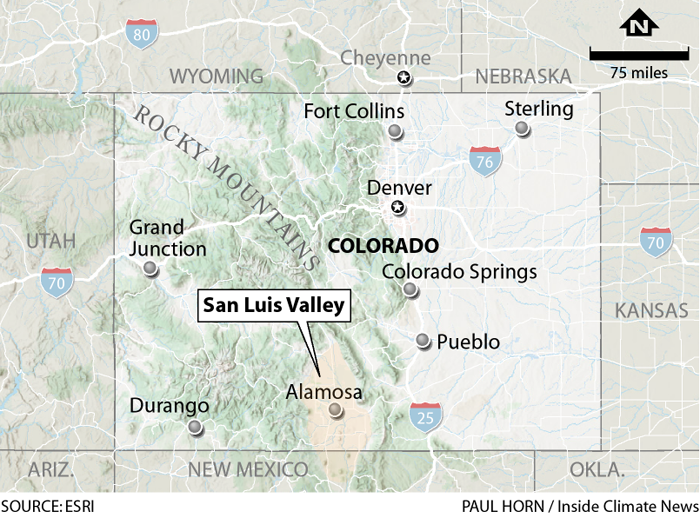
The San Luis Valley relies on surface water from the Rio Grande and a massive aquifer system, one of the largest in North America, to drive its agricultural economy. But the aquifer is severely overallocated, losing an estimated 1.2 million acre-feet of water between 1976, when tracking began, and 2013—equivalent to more than five times what the city of Denver consumes each year. This year, the aquifer could hit another record low, as Colorado’s snowpack, which recharges the state’s aquifers, is at the lowest level since record-keeping began in 1941.
Researchers are finding that as groundwater levels drop, the remaining water contains higher concentrations of carcinogenic heavy metals. The valley’s well water users, many of them in historically underserved communities, are increasingly concerned about what’s in their drinking water. But with little governmental oversight of private wells or resources to help track and manage quality, they have few options to make it safe.
Anna Vargas, a sixth-generation resident of the San Luis Valley, remembers making snowmen often as a child, and her mother talking about the daily rains during the summer monsoon season. Now, monsoon season barely exists here, Vargas said. “As the years have gone by, there’s less rain, less snowfall. I’ve lived in the valley long enough to see the changes in weather patterns,” says Vargas, project manager with the SLV Ecosystem Council. “We depend a lot on snowpack, and we have hardly any this year. It’s concerning for all of us in the Rio Grande basin…The heavy metals will just become more concentrated.”
Heavy metals like arsenic, tungsten, uranium, manganese and selenium occur naturally in rocks and soils and come up with groundwater that is pumped to the surface. With drought, Zahringer said, they can become a problem. “We’re not seeing a dilution of any of the contaminants…so anything that’s in the geologic makeup is just really concentrating,” said Zahringer, whose tests have documented contaminant levels rising in the wells during dry periods. In addition, as aquifer levels drop during droughts—and due to overpumping—its geochemistry shifts, says Kathy James, Ph.D., associate professor with the Colorado School of Public Health. More anaerobic conditions are created as water sinks deeper below the surface, which can cause more naturally occurring metals to dissolve into the water.
EDIT
https://insideclimatenews.org/news/08052026/colorado-drought-threatens-rural-drinking-water/

 = new reply since forum marked as read