Environment & Energy
Related: About this forum
2026 Study on whether EV's are better for the environment than ICE vehicles (not one from 2019)
whoops - wrong link
Link to tweet
?s=20
 = new reply since forum marked as read
Highlight:
NoneDon't highlight anything
5 newestHighlight 5 most recent replies
= new reply since forum marked as read
Highlight:
NoneDon't highlight anything
5 newestHighlight 5 most recent replies

NNadir
(38,855 posts)...aren't they?
Meanwhile, on planet Earth:
Weekly average CO2 at Mauna Loa
Week beginning on June 14, 2026: 431.17 ppm
Weekly value from 1 year ago: 429.43 ppm
Weekly value from 10 years ago: 407.35 ppm
Last updated: June 25, 2026
All those mines, and all those slaves in Africa digging in them to make batteries seem not to have put out the fires.
WHO CARES?????? WE HAVE OUR CARS!!!!
The indecency of our bourgeois class never seems to reach a bottom, does it.
A burning planet, but well, hydrogen and batteries. The myopia and the contempt for the planet and the people on it is astounding, absolutely astounding.
Things are so hot that to me at least, as an environmentalist who deprecates consumer indifference, even my own, that antinuke heaven, a celebration of depravity, seems to me to be as hot and as horrible as hell.
As for a tweet claiming to overrule a scientific paper in 2019, this one in 2024 is a little more credible, at least to someone with respect who has any respect for science (not to mention decency):
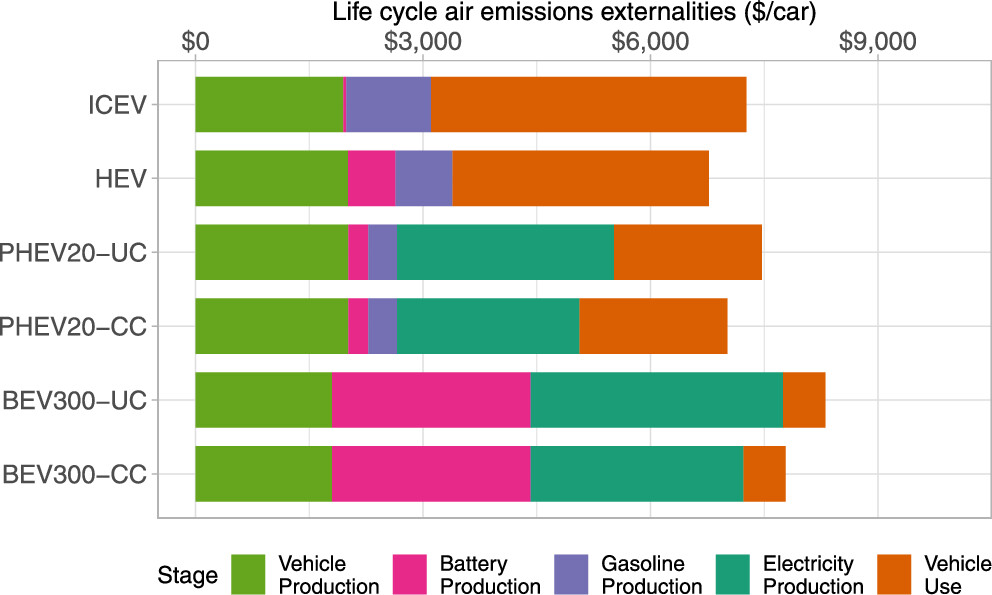
It looks like on my grid, my type of car is the least obnoxious, although all cars are obnoxious, including mine.
On and it's not like people really wait until the sun is shining and the wind is blowing to charge their "green" electric cars, is it?
Tweets pretending to offer magic "MIT" as the ultimate authority actually don't mean anything when we look at the data at the Mauna Loa observatory. I have no idea what the reference to "2019" in the OP might mean, but in week beginning June 23, 2019, the concentration of the fossil fuel waste carbon dioxide in the planetary atmosphere was 413.35 ppm, about 18 ppm lower than it is just 7 years later.
The problem is vast ignorance of what electricity is and where it comes from. Our bourgeoisie around here seem to think it comes out a wall socket connected to some industrialized former wilderness bulldozed into an industrial park for so called "renewable energy." The reality is that it's overwhelmingly generated, everywhere on the planet by the combustion of dangerous fossil fuels.
The IEA had an extensive body of these going up to 2023
Here, for convenience, is the Sankey Diagram of the whole world for 2023 which shows up when you click on the link:

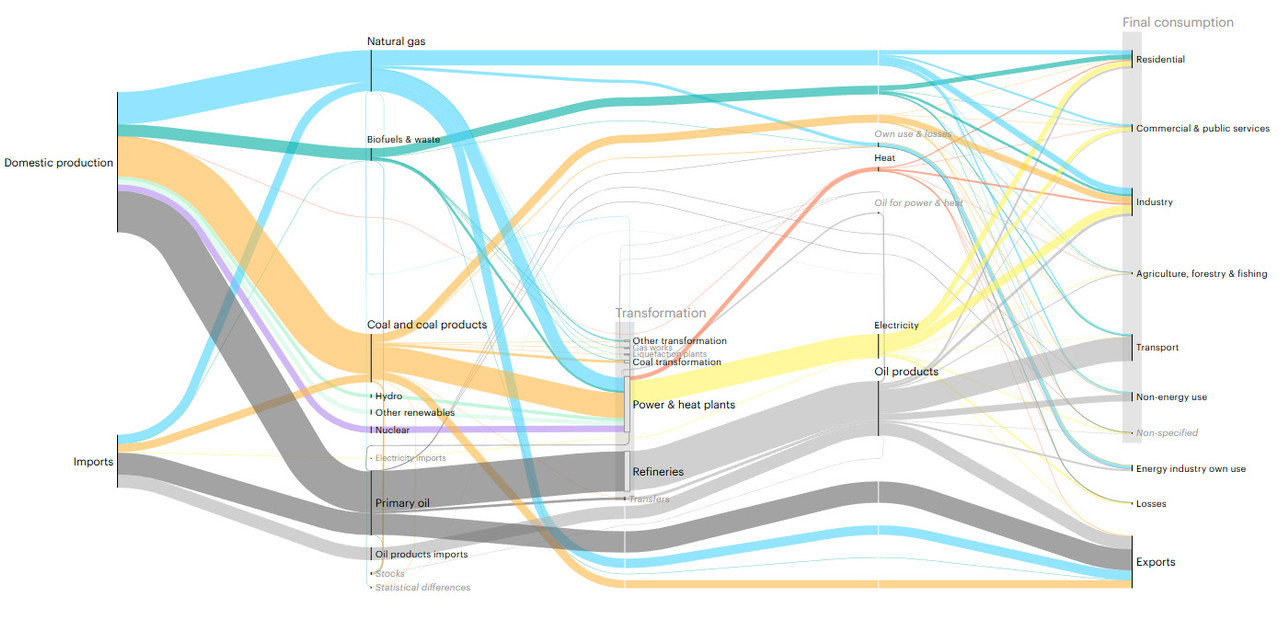
Now, I'm sure that people who think it's OK to waste electricity to charge batteries will announce that 2026 is very different than 2023, because well, it's three whole years later, perhaps by producing a tweet, but, being a scientist as opposed to a credulous rube, I'm unimpressed. The planet is burning and the numbers are clear even if the skies aren't.