Health
Related: About this forumShingles vaccine may slow progression of dementia, new study suggests
Shingles vaccine may slow progression of dementia, new study suggests
By Jacqueline Howard
Updated Dec 2, 2025
Updated Dec 2, 2025, 2:01 PM ET
PUBLISHED Dec 2, 2025, 11:16 AM ET
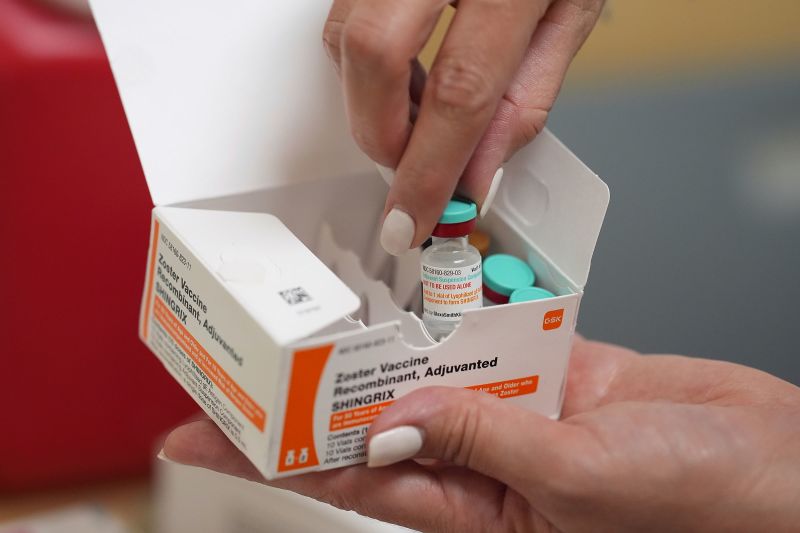
A pharmacist displays doses of a vaccine that protects against shingles, at a CVS Pharmacy in Miami, on September 9, 2025. Rebecca Blackwell/AP/File
The shingles vaccine not only offers protection against the painful viral infection, a new study suggests that the two-dose shot also may slow the progression of dementia.
Shingles, caused by the varicella-zoster virus, presents as a painful rash and it’s estimated that about 1 in every 3 people in the United States will develop the illness in their lifetime. But the risk of shingles and serious complications increases with age, which is why in the United States, two doses of the shingles vaccine is recommended for adults 50 and older.
Vaccination is estimated to be more than 90% effective at preventing shingles in older adults, but recent research has shed light on some other potential benefits, too.
Emerging research suggests that getting the vaccine to protect against shingles may reduce the risk of developing dementia. A follow-up study, published Tuesday in the journal Cell, adds to that research by suggesting that the vaccine could also have therapeutic properties against dementia, by slowing the progression of the disease, leading to a reduced risk of dying from the disease.
{snip}

 = new reply since forum marked as read
Highlight:
NoneDon't highlight anything
5 newestHighlight 5 most recent replies
= new reply since forum marked as read
Highlight:
NoneDon't highlight anything
5 newestHighlight 5 most recent replies

Lovie777
(22,333 posts)got shingles about 4 years ago. It's painful. Got all the shots.

RandySF
(82,285 posts)I got it even after I was vaccinated.

SWBTATTReg
(26,152 posts)Our Aunt/nurse, Moms, etc. would gather all of the kids who would stay at one house, w/ the adults who already were immune to Shingles (they caught already).
Shingles, also known as herpes zoster, is a painful, blistering skin rash caused by reactivation of the varicella zoster virus (the same virus that causes chickenpox).
I don't know if Shingles does slow dementia down, my Aunt who held one or more chicken pox parties was in pretty bad shape, dementia-wise unfortunately...she was at least in her 80s.

chia
(2,768 posts)Also, even though they come from the same virus, the conditions chicken pox and shingles are not interchangeable, and you can get a repeat case of shingles. If you haven't had chickenpox and are exposed to it, you won't get shingles, but you could get chickenpox.

Zambero
(9,939 posts)Following a chicken pox infection, the herpes zoster virus goes dormant within the CNS, potentially re-activating later in life. I understand that the virus can wreak havoc on the brain itself. So the effect of the vaccine in reducing or slowing down the potential for dementia would seem to come from enhancing immunity against herpes zoster, which might otherwise impact brain cells and contribute to an onset of dementia. Just wondering. At any rate, given a 1 in 3 chance of coming down with shingles, getting the two-course vaccine would seem to be very well-informed preventative choise.
SWBTATTReg
(26,152 posts)SWBTATTReg
(26,152 posts)only type of 'sick' party we all participated in, all of the kids in our extended family (cousins and us) would stay at one place when someone came down w/ it. Basically all over and done w/ at one time, and easier on all. I haven't heard the likes of these parties for a while, so more than likely, docs may frown on it, or the vaccines have arrived full force, thus no need.
One thing I do seem to remember, was that adults getting Chickenpox was not a good thing, they seemed to be impacted more adversely w/ the C. Pox, so not a good thing.
Origins and Purpose
Chickenpox parties became popular in the United States during the 1970s and 1980s. The idea was to deliberately expose children to the chickenpox virus at a young age, under the belief that contracting the disease early would lead to milder symptoms and lifelong immunity. Parents would organize playdates where healthy children would interact with an infected child, often sharing items like lollipops to facilitate the spread of the virus.
Wikipedia