Welcome to DU!
The truly grassroots left-of-center political community where regular people, not algorithms, drive the discussions and set the standards.
Join the community:
Create a free account
Support DU (and get rid of ads!):
Become a Star Member
Latest Breaking News
Editorials & Other Articles
General Discussion
The DU Lounge
All Forums
Issue Forums
Culture Forums
Alliance Forums
Region Forums
Support Forums
Help & Search
Anthropology
Related: About this forum
It Rivaled Ancient Egypt, Then Vanished: New Study Pinpoints Why the Indus Valley Fell
By Springer Nature
November 30, 2025
3 Mins Read
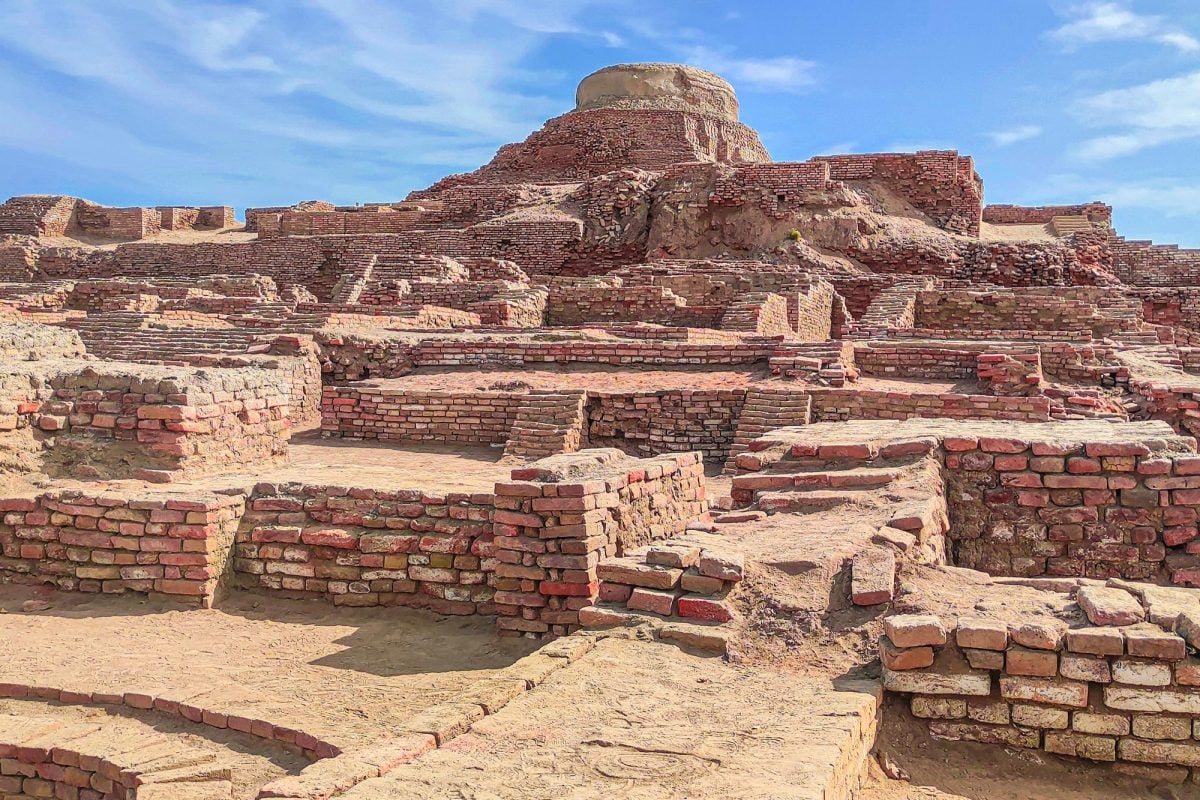
New climate simulations suggest that a series of unusually long, region-wide droughts may have quietly reshaped the Indus Valley Civilization’s fate. Credit: Shutterstocknbs
A series of severe droughts, each extending for more than 85 years, was likely a major contributor to the gradual decline of the Indus Valley Civilization, according to research published in Communications Earth & Environment.
These results offer new insight into why this influential ancient society — a contemporary of ancient Egypt located near the present-day India-Pakistan border — weakened over time and demonstrate how environmental pressures can shape the course of early civilizations.
Background on the Indus Valley Civilization
The Indus Valley Civilization (IVC) was among the world’s earliest urban cultures, flourishing between 5,000 and 3,500 years ago along the Indus River system in what is now Pakistan and northwest India. At its height, between 4,500 and 3,900 years ago, the society featured well-planned cities and advanced water management. Despite this sophistication, the factors behind the civilization’s slow decline have remained uncertain.
Vimal Mishra and his team reconstructed climate patterns across the IVC region from 5,000 to 3,000 years ago. Their analysis combined climate simulations with evidence from several indirect records of past environmental conditions, including the geochemical signatures of stalactites and stalagmites in two Indian caves and water level data from five lakes in northwest India.
Long drought cycles reshaped settlement choices in the Indus region. These climate stresses likely contributed to its slow collapse.
More:
https://scitechdaily.com/it-rivaled-ancient-egypt-then-vanished-new-study-pinpoints-why-the-indus-valley-fell/
2 replies
 = new reply since forum marked as read
Highlight:
NoneDon't highlight anything
5 newestHighlight 5 most recent replies
= new reply since forum marked as read
Highlight:
NoneDon't highlight anything
5 newestHighlight 5 most recent replies
= new reply since forum marked as read
Highlight:
NoneDon't highlight anything
5 newestHighlight 5 most recent replies
It Rivaled Ancient Egypt, Then Vanished: New Study Pinpoints Why the Indus Valley Fell (Original Post)
Judi Lynn
Nov 2025
OP

erronis
(24,895 posts)1. Seems to have affected inland areas such as the Indus river valley more than seaside civilizations
Which would make sense if the droughts were depleting the river water sources (mountain streams, snow cover, etc.). It would be interesting to match this to the effects of the climate during the same time to life along the Mediterranean, Black Sea, Nile valley, etc.

msongs
(74,453 posts)2. Iran seems to be having the same problem nt